
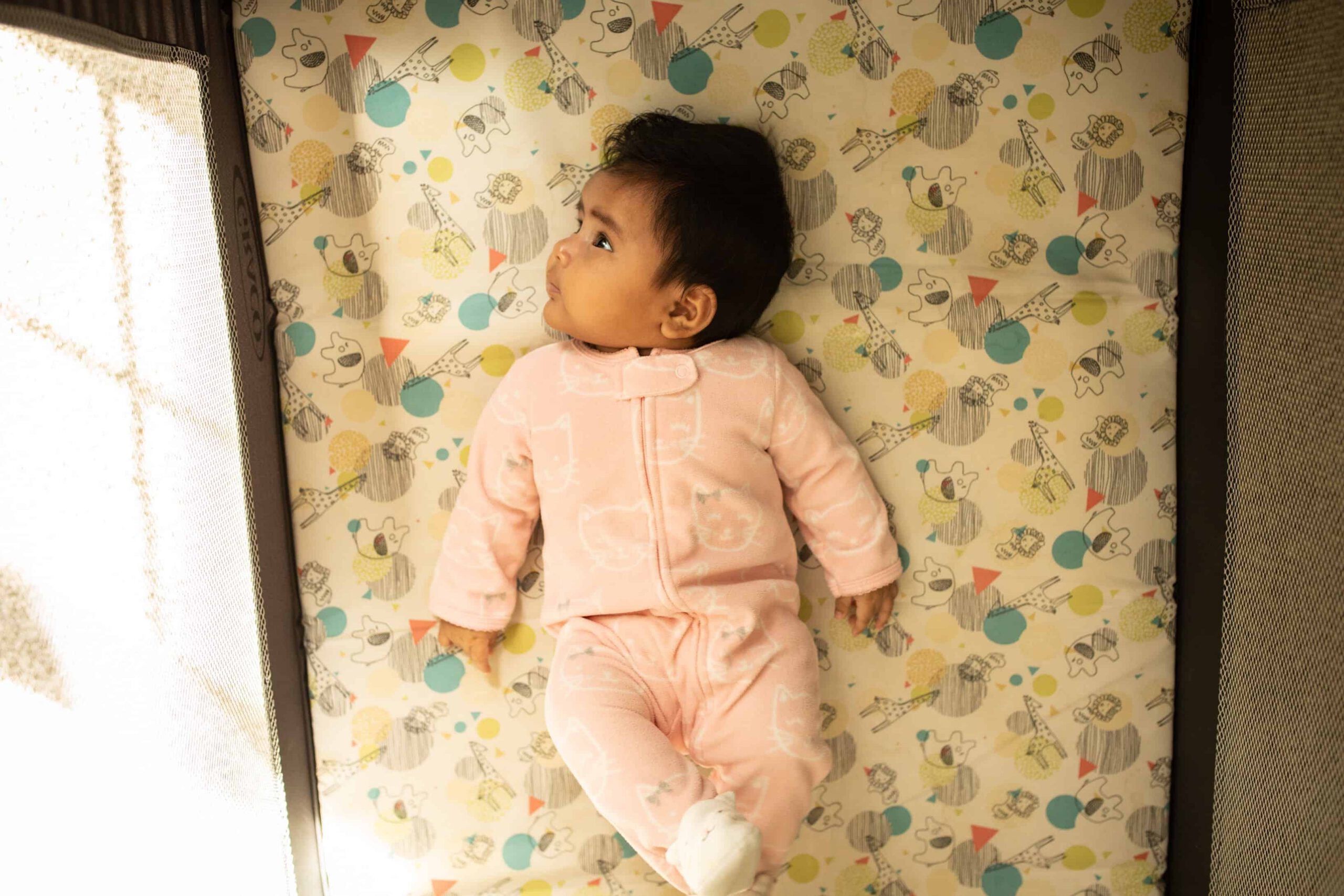
Babies who sleep on their backs are much less likely to die suddenly and unexpectedly than babies who sleep on their stomachs or sides. The problem with the side position is that your baby can roll more easily onto their stomach. Some parents worry that babies will choke when they’re on their backs. But your baby’s airway anatomy and their gag reflex will keep that from happening. Even babies with gastroesophageal reflux disease (GERD) should sleep flat on their backs.
Also keep in mind:
- A newborn should be placed skin-to-skin with their mother as soon after birth as possible, for at least an hour. After that, or when the mother needs to sleep or take care of her other needs, the baby should be placed on their back in a bassinet with no incline.
- Preemies may need to be on their stomachs temporarily while they’re in the NICU, but you should place them on their backs as soon as they’re medically stable. This helps them adjust to sleeping on their backs before going home.
- Some babies will roll onto their stomachs. You should always place your baby to sleep on their back, but if they’re comfortable rolling both ways (back to tummy, tummy to back), then you don’t need to keep turning your baby to their back again. Be sure that there are no blankets, pillows, stuffed toys or bumper pads in your baby’s bed, though. Your baby could roll into any of these items, which could block their airflow.
Common Questions
No. Many parents worry that their baby will choke when sleeping on his or her back, but this is not true. Infants are actually less likely to choke when placed on their backs. Babies have a reflex to keep their airway clear and avoid choking. They will cough up or swallow any fluid or spit up.
Some parents worry that babies will choke when on their backs, but the baby’s airway anatomy and the gag reflex will keep that from happening. Even babies with gastroesophageal reflux (GERD) should sleep on their backs.