English|Español
  • Skip to primary navigation
  • Skip to main content
Safe Sleep North Carolina
  • About
    • About Safe Sleep
    • Contact
  • Resources
    • View All Resources
    • Trainings
  • Providers
  • Key Risks
  • Recommendations
  • Español
    • Inicio
    • Recomendaciones
    • Riesgos principales
    • Sobre nosotros
Safe Sleep Recommendations

Safe Sleep Recommendations

Below is a breakdown of the safe sleep recommendations from the American Academy of Pediatrics based on decades of research.
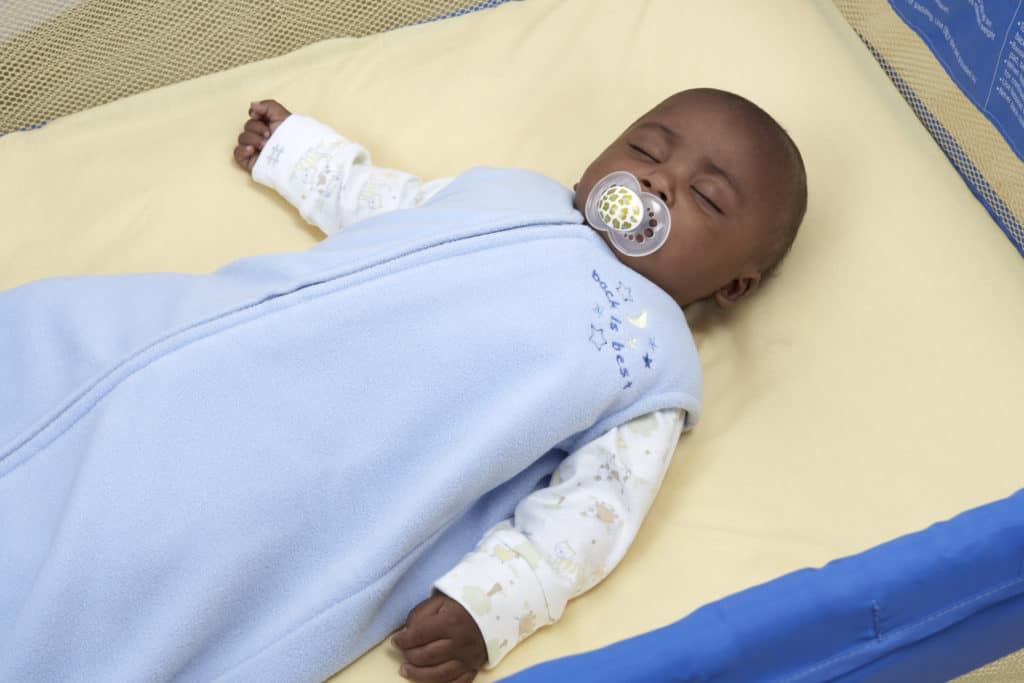
  • Put your baby on their back for all naps and at night.

    Put your baby on their back for all naps and at night.

    PDF

    Babies who sleep on their backs are much less likely to die suddenly and unexpectedly than babies who sleep on their stomachs or sides. The problem with the side position is that your baby can roll more easily onto their stomach. Some parents worry that babies will choke when they’re on their backs. But your baby’s airway anatomy and their gag reflex will keep that from happening. Even babies with gastroesophageal reflux disease (GERD) should sleep flat on their backs.

    Also keep in mind:

    • A newborn should be placed skin-to-skin with their mother as soon after birth as possible, for at least an hour. After that, or when the mother needs to sleep or take care of her other needs, the baby should be placed on their back in a bassinet with no incline.
    • Preemies may need to be on their stomachs temporarily while they’re in the NICU, but you should place them on their backs as soon as they’re medically stable. This helps them adjust to sleeping on their backs before going home.
    • Some babies will roll onto their stomachs. You should always place your baby to sleep on their back, but if they’re comfortable rolling both ways (back to tummy, tummy to back), then you don’t need to keep turning your baby to their back again. Be sure that there are no blankets, pillows, stuffed toys or bumper pads in your baby’s bed, though. Your baby could roll into any of these items, which could block their airflow.

    Common Questions

    No. Many parents worry that their baby will choke when sleeping on his or her back, but this is not true. Infants are actually less likely to choke when placed on their backs. Babies have a reflex to keep their airway clear and avoid choking. They will cough up or swallow any fluid or spit up.

    Some parents worry that babies will choke when on their backs, but the baby’s airway anatomy and the gag reflex will keep that from happening. Even babies with gastroesophageal reflux (GERD) should sleep on their backs.

  • Use a firm and flat sleep surface.

    Use a firm and flat sleep surface.

    A firm surface means that it shouldn’t indent when your baby is lying on it.

    Surfaces
    PDF

    A firm surface means that it shouldn’t indent when your baby is lying on it. Any surface that inclines more than 10 degrees isn’t safe for your baby to sleep on.

    • Place your baby in a crib, bassinet, portable crib or play yard that meets the safety standards of the Consumer Product Safety Commission (CPSC).
    • Check the CPSC website to make sure your crib hasn’t been recalled, especially if it’s not new.
    • Make sure your crib mattress is designed for your specific crib and that it fits tightly. Use a fitted sheet only—nothing else should be in the crib with your baby.
    • Don’t use a crib that doesn’t have instructions, is missing hardware or that’s broken.
    • Alternative sleep surfaces are only considered a safe option if they comply with the June 2021 CPSC rule that all infant sleep products must meet the existing federal safety standards for cribs, bassinets, portable cribs or play yards. This includes inclined sleep products, hammocks, baby boxes, in-bed sleepers, baby nests and pods, compact bassinets, travel bassinets and baby tents. If a product doesn’t meet federal safety standards, avoid it.
    • If your baby falls asleep in a car seat, stroller, swing, infant carrier or sling, you should move them to a firm sleep surface on their back as soon as possible.
    • Don’t use products for sleep that aren’t specifically marketed for infant sleep. Examples include Boppy pillows and Dock-a-Tots.
    • In an emergency, you can temporarily put your baby to sleep in a box, basket, dresser drawer or something similar. It should have thin, firm padding. As soon as you can get a CPSC-approved sleep surface, move your baby to that instead.
    • If you need financial help, there are organizations throughout the United States that provide low-cost or free sleep surfaces. Check with your local Social Services agency.

    Click HERE to learn about where your baby should and should not sleep, so you can make the best choice for you and your baby.

    Common Questions

    No. You might think that the mattress in your crib or the pad in your portable crib is too hard, but these firm surfaces are just right for your baby. Only add a fitted sheet. Nothing more. Don’t try to make it soft or more comfy for your baby. Soft surfaces are very dangerous for babies because they increase the risk of suffocation.

    Sitting devices, such as car seats, strollers, swings, and infant carriers are not recommended for routine sleep. Infants do not have much control of their heads and necks. When your baby is sleeping in an inclined seat his/her head can fall forward which can make it difficult to breathe, resulting in positional asphyxiation.

    When your infant is in their car seat in the car the car seats inclines, but when out of the car base they do not incline as much—making them risky places to sleep. When you get home, you should always take your baby out of the car seat whether he/she is sleeping or not.

    Also let your family and daycare provider know that you don’t want your baby sleeping in the car seat or other sitting device.

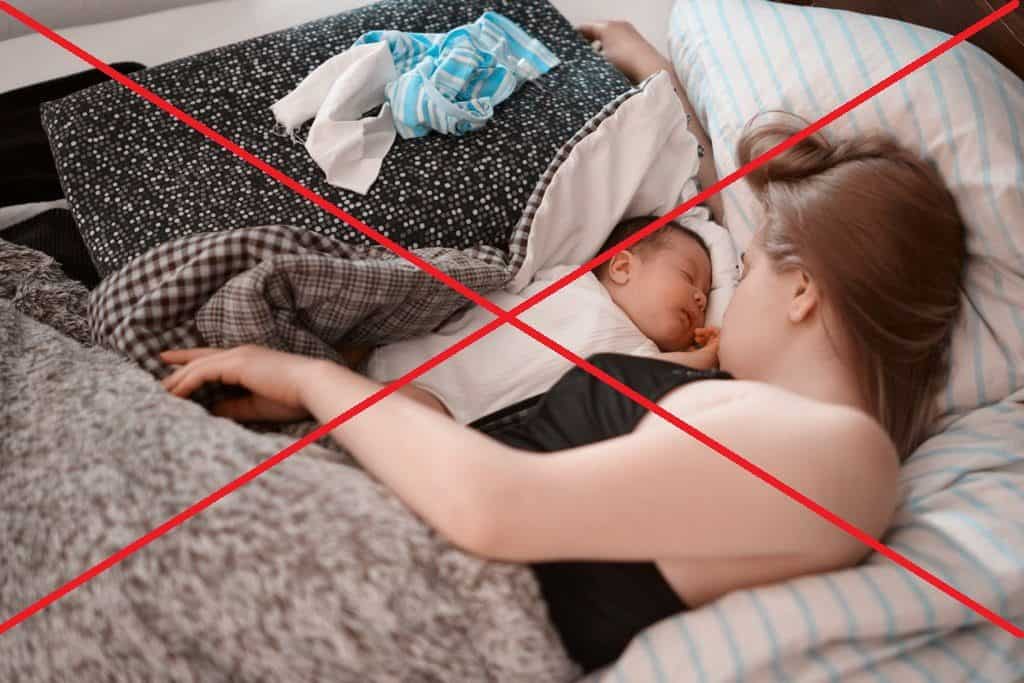
  • Never sleep with your baby.

    Never sleep with your baby.

    Based on the evidence, the AAP doesn’t recommend bed sharing with your baby under any circumstances. This includes twins and other multiples.
    PDF

    If you bring your baby into your bed to feed or comfort them, place them in their own sleep space when you’re ready to go to sleep.

    If there is any possibility that you might fall asleep while your baby is in your bed, make sure there are no pillows, sheets, blankets or any other items that could cover your baby’s face, head and neck or overheat them. As soon as you wake up, be sure to move your baby to their own bed.

    Avoid falling asleep with your baby in other spots, too. The risk of sleep-related infant death is up to 67 times higher when infants sleep with someone on a couch, soft armchair or cushion.

    It’s extra important not to bed share with your baby if:

    • You have been drinking alcohol, used marijuana or taken any medicines or illicit drugs. The risk of sleep-related infant death is more than 10 times higher for babies who bed share with someone who is fatigued or has taken medications that make it harder for them to wake up; has used substances such as alcohol or drugs.
    • Your baby is very young, small or was born prematurely. The risk of sleep-related infant death while bed sharing is 5 to 10 times higher when your baby is younger than 4 months olds. And the risk of sleep-related infant death is 2 to 5 times higher when your baby was born preterm or with low birth weight.
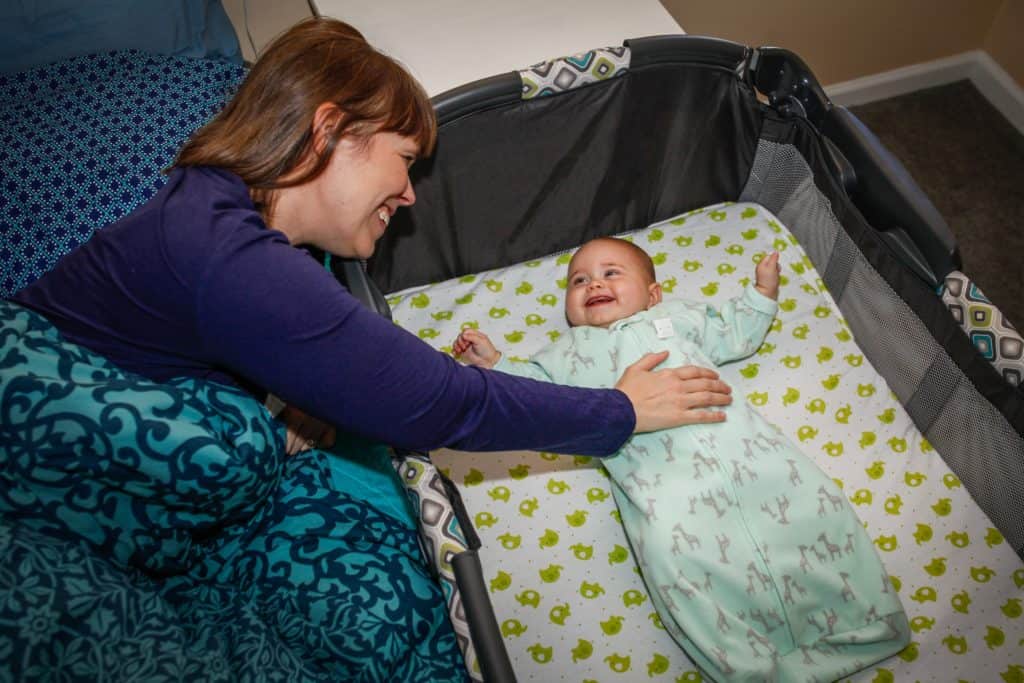
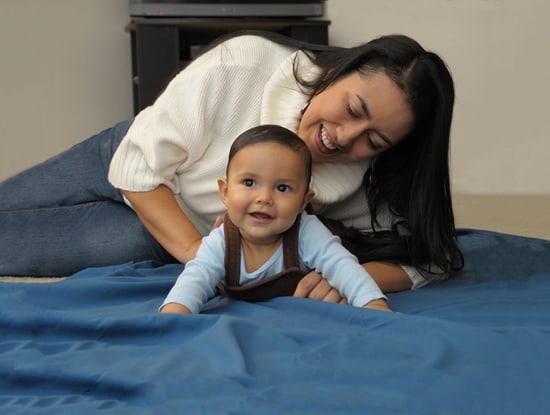
  • Instead of bed sharing, room share with your baby.
    Instead of bed sharing, room share with your baby.

    The AAP recommends room sharing because it can decrease the risk of SIDS by as much as 50% and it’s much safer than bed sharing.

    PDF

    This means keeping your baby’s sleep area in the same room where you sleep for at least the first 6 months. Place your baby’s crib, bassinet, portable crib or play yard in your bedroom, close to your bed. The AAP recommends room sharing because it can decrease the risk of SIDS by as much as 50% and it’s much safer than bed sharing. Room sharing will also make it easier for you to feed, comfort and watch your baby.

  • Keep soft objects and loose bedding out of your baby’s sleep area.

    Keep soft objects and loose bedding out of your baby’s sleep area.

    These objects can increase your baby’s risk of entrapment, suffocation or strangulation.

    PDF

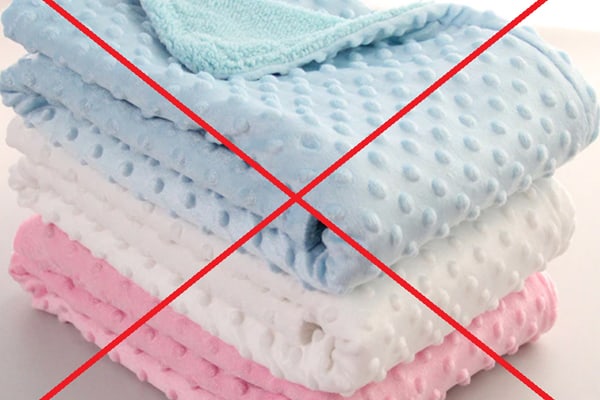
    This includes pillows and pillow-like toys, quilts, comforters, mattress toppers, non-fitted sheets, blankets, toys, bumper pads or related products that attach to crib slats or sides.
    • If you’re worried about your baby getting cold, you can dress them in layers of clothing or use a wearable blanket. In general, you should dress your baby in only one layer more than you’re wearing.
    • Don’t use weighted blankets, sleepers, swaddles or other weighted objects on or near your baby.

    Common Questions

    If you are worried about your baby getting cold, you can use infant sleep clothing, such as a wearable blanket. In general, your baby should be dressed with only one layer more than you are wearing.

    No. Bumper pads should never be used in an infant’s crib. We now have crib safety standards that make bumper pads unnecessary. The bars on newer cribs are no longer wide enough that a baby could get their head stuck in the crib bars and hurt themselves. Bumper pads can be very dangerous because they can cause suffocation and/or entrapment.

    The Consumer Product Safety Commission’s standards now require crib bars to be no further apart than 2 3/8 inches. An easy test is to take a normal can of soda and try to fit it between the bars. If it fits, your crib does not meet the current safety standards.

    Yes, but make sure that the baby is always on his or her back when swaddled. The swaddle should not be too tight or make it hard for the baby to breathe or move his or her hips. When your baby looks like he or she is trying to roll over, you should stop swaddling.

    • No. Having two or more babies will mean having two or more cribs or portable cribs—one for each baby. The AAP states that each baby should sleep on his or her own sleep surface. There are special bassinets made for two babies–remember do not put your twins together in a bassinet made for one baby. There is not enough room for them to sleep safely.
    • Babies sleeping together can increase the risk of Sudden Infant Death Syndrome (SIDS) and suffocation.
    • Twins are also more likely to be born prematurely or have low birth weights, both of which can put them at an increased risk of SIDS and other sleep-related deaths.
    • It can be hard to fit two cribs into one bedroom, especially since it is recommended that babies sleep in the same room as their parents for the first six to 12 months. Smaller bassinets and portable cribs can help save space.
    • When your babies are sleeping remember that they each should sleep in a crib (portable crib or bassinet) with a flat, firm surface and a tight, fitted sheet. Skip all soft bedding, including pillows and bumper pads.
    • Once your twin babies leave sleeping in your room (in their own separate cribs), it’s up to you whether you want to put them in separate rooms or in the same room in separate cribs.
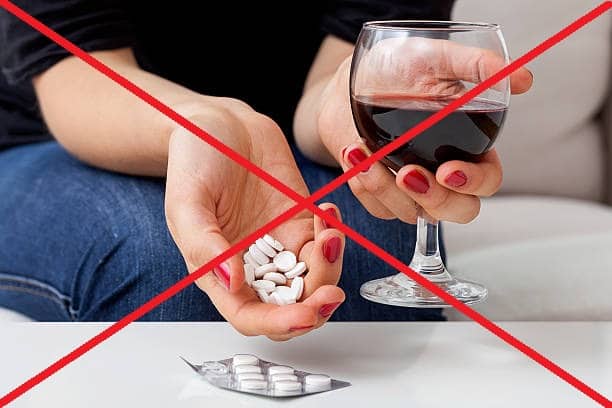
  • Do not use alcohol and substances that can impair your ability to care for your infant.

    Do not use alcohol and substances that can impair your ability to care for your infant.

    Substance Use Can Increase Risks for an Unsafe Sleep Space for Baby

    PDF

    It’s important to be aware of how alcohol, cannabis (marijuana, THC, pot), opioids, illicit drug use, and some medicines can affect your decision-making, especially when it comes to how and where baby sleeps.

     Infant accidental suffocation deaths can happen when parents or caregivers are using alcohol, drugs, or certain medicines. It can be harder to be sure that baby is sleeping safely if parents or caregivers are impaired.

    If parents or caregivers are sharing a sleep space with a baby, they may not be aware of where the baby is sleeping and whether any bedding is covering baby or whether baby has rolled into any bedding. The parents or caregivers themselves may not be aware that they have rolled onto baby.

    Research has shown that when a parent has drunk two or more drinks of alcohol and then slept with a baby, that baby is at much higher risk of dying from sleep-related causes and the younger the baby the higher the risk. This study also showed a much greater risk of a baby dying of sleep-related causes associated with a parent’s use of illegal drugs when bed sharing.

    Need Help?

    The Alcohol / Drug Council of NC provides information and referrals to alcohol and drug treatment. They also provide educational programs and materials to businesses, community groups, families, and individuals. There are special programs for mothers who are pregnant and those caring for their babies/young children.

    Call Anytime 800.688.4232 Text M-F 12AM-6PM  919.908.3196

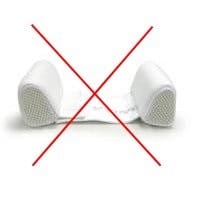
  • Do not let your child fall asleep on nursing pillows or pillow-like lounging pads.
    Do not let your child fall asleep on nursing pillows or pillow-like lounging pads.

    PDF

    Babies may roll over onto their sides or stomachs and turn their heads into the soft fabric and suffocate. Or, when propped up on an incline against the pillow or lounger, their heads can fall forward, blocking their airway. Babies do not need the soft padding of pillow.

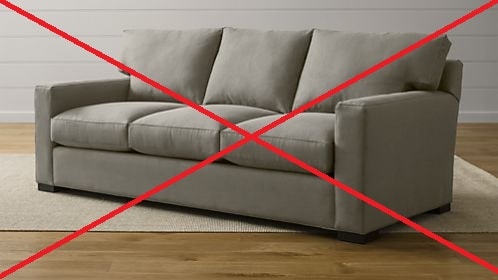
  • Never place your baby to sleep on a couch, sofa, or armchair.
    Never place your baby to sleep on a couch, sofa, or armchair.

    PDF

    This is an extremely dangerous place for your baby to sleep. Also, don’t care for your baby on a couch, sofa, or armchair if you are tired and might fall asleep with them.

  • Don’t let your baby get overheated.

    Don’t let your baby get overheated.

    PDF

    Overheating can increase the risk of SIDS. Your baby only needs one more layer than you would wear in the same environment to be comfortable.

    • Check your baby for signs of overheating such as sweating, a hot chest or flushed skin.
    • Don’t put a hat on your baby while indoors once you’re home from the hospital.
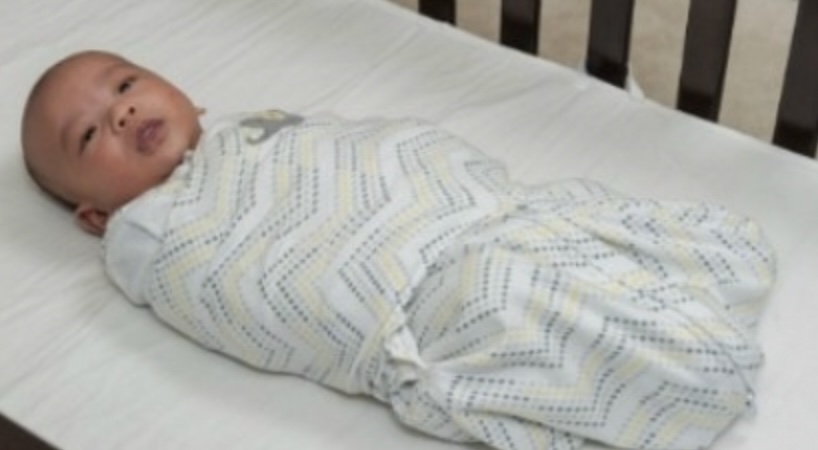
  • Swaddle your baby if you like, but follow a few factors.

    Swaddle your baby if you like, but follow a few factors.

    PDF
    • Make sure that your baby is always on their back when swaddled.
    • The swaddle should not be too tight or make it hard for your baby to breathe or move their hips.
    • When your baby looks like they’re trying to roll over, you should stop swaddling them. The risk of suffocation is higher if your baby rolls to their stomach while they’re swaddled. Rolling over usually happens around 3 to 4 months, but it can happen earlier.
    • Don’t use weighted swaddle blankets or weighted objects like rice bags inside the swaddle.
    • Click HERE to learn more about swaddling.
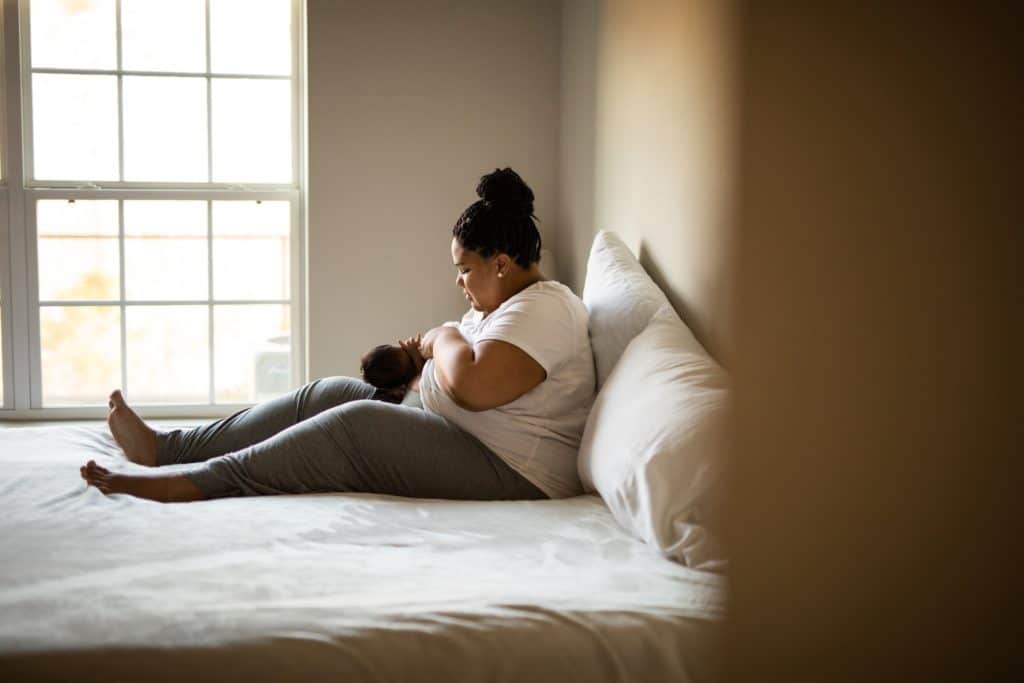
  • Feed your baby breast milk

    Feed your baby breast milk

    Evidence shows that human milk reduces the risk of SIDS. The longer you give your baby breast milk, the more protection it gives.

    PDF

    Evidence shows that human milk reduces the risk of SIDS. The longer you give your baby breast milk, the more protection it gives.

    • Breastfeed or feed your baby expressed breast milk. The AAP recommends breastfeeding as the sole source of nutrition for your baby for about 6 months.
    • Even after you add solid foods to your baby’s diet, continue breastfeeding until they’re at least 12 months, or longer if you and your baby desire.
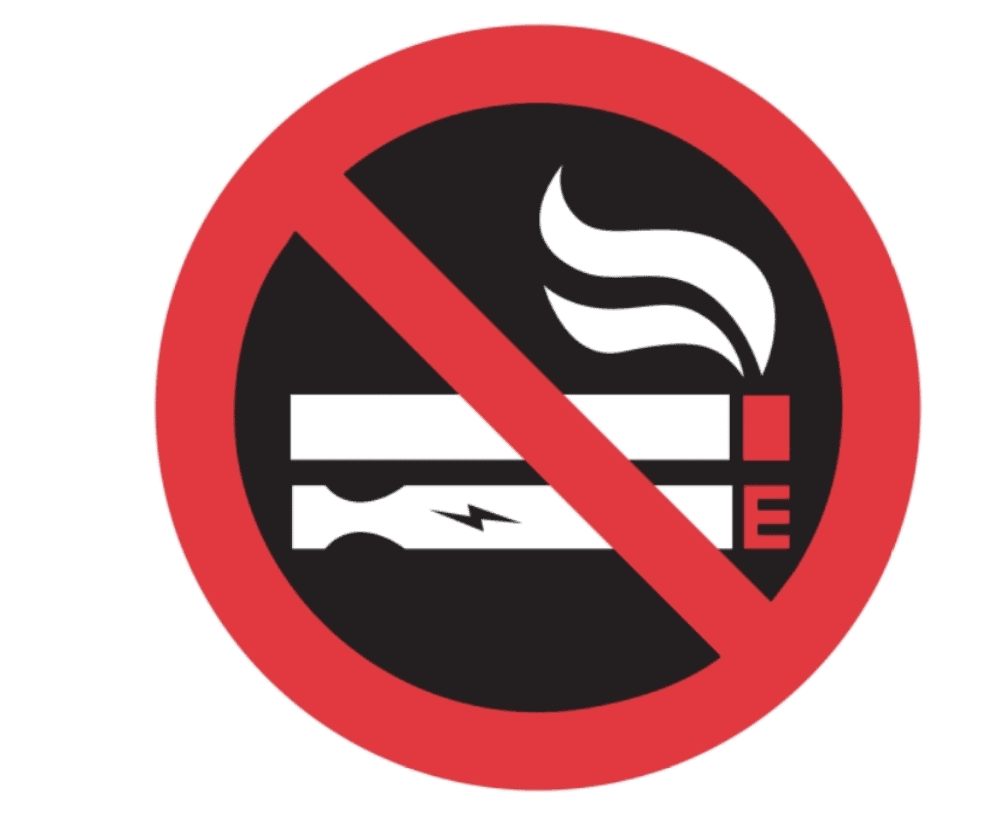
  • Don’t smoke or use nicotine during pregnancy or after your baby is born.

    Don’t smoke or use nicotine during pregnancy or after your baby is born.

    Smoking while you’re pregnant, and smoke in your baby’s environment after birth, are significant risk factors for SIDS.

    PDF

    Smoking while you’re pregnant, and smoke in your baby’s environment after birth, are significant risk factors for SIDS. Don’t smoke anywhere near your baby, even if you’re outside. This includes vaping and electronic cigarettes, which contain nicotine. Keep your car and home smoke-free. Get rid of secondhand smoke in any areas your baby and other nonsmokers spend time. If you’re a smoker or you smoked during pregnancy, remember that it’s especially important that you don’t bed share with your baby. The risk of SIDS is especially high, even when the smoker doesn’t smoke in bed.

  • Try giving your baby a pacifier at nap time and bedtime.

    Try giving your baby a pacifier at nap time and bedtime.

    PDF

    This helps reduce the risk of SIDS, even if the pacifier falls out after your baby is asleep. But keep in mind:

    • If your baby is breastfed, wait until breastfeeding is established before offering a pacifier. That means your milk supply is good, breastfeeding is comfortable and consistent, your baby is latching well and they’re gaining weight like they should. If you’re not breastfeeding your baby, you can start the pacifier whenever you like.
    • It’s OK if your baby doesn’t want a pacifier. You can try offering again later, but some babies simply don’t like them. If the pacifier falls out after your baby falls asleep, you don’t have to put it back in.
    • Don’t hang a pacifier around your baby’s neck or attach it to their clothing when they’re sleeping.
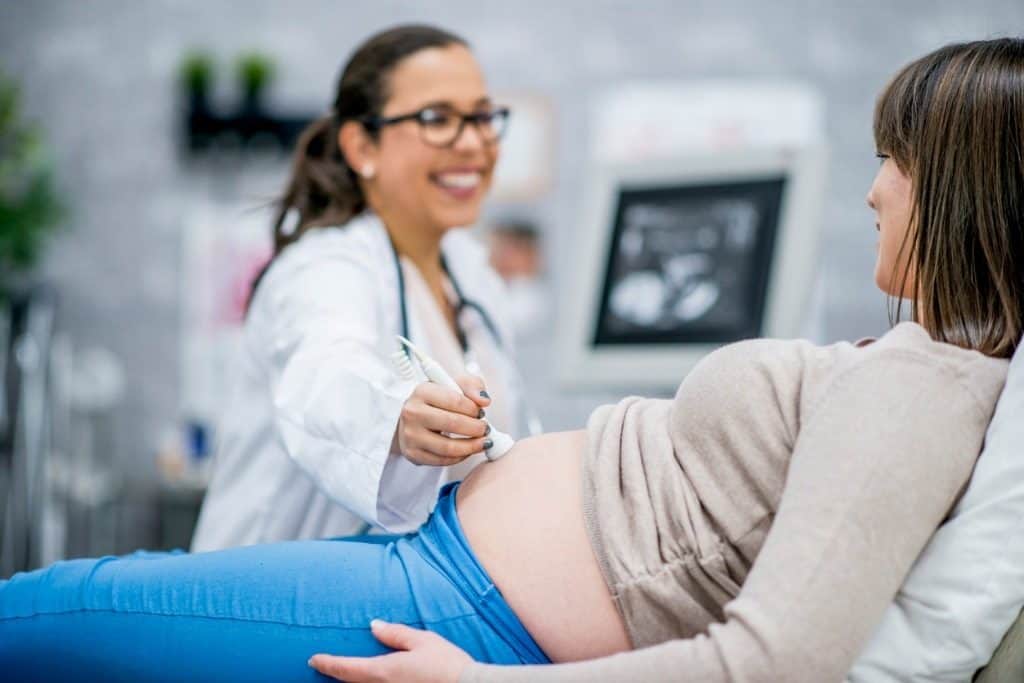
  • Get regular prenatal care and avoid substance use during pregnancy.

    Get regular prenatal care and avoid substance use during pregnancy.

    There’s strong evidence that routine prenatal care reduces your baby’s risk of SIDS.

    PDF

    There’s strong evidence that routine prenatal care reduces your baby’s risk of SIDS. Also, avoid alcohol, marijuana, opioids or illicit drugs during pregnancy and after your baby is born. The risk of SIDS is higher when babies are exposed to alcohol or illicit substances.

  • Schedule and go to all well-child care visits.

    Schedule and go to all well-child care visits.

    Regular check-ups help ensure your baby’s growth and development is on track.

    PDF

    Regular check-ups help ensure your baby’s growth and development is on track. In addition, your baby will receive important immunizations at these well-child visits with your pediatrician. Evidence suggests that infant vaccinations may help protect against SIDS.

  • Make sure your baby has tummy time while awake every day.

    Make sure your baby has tummy time while awake every day.

    An awake adult should supervise awake tummy time. This helps with your baby’s motor development and prevents flat head syndrome.

    PDF

    An awake adult should supervise awake tummy time. This helps with your baby’s motor development and prevents flat head syndrome. Start with a short amount of tummy time soon after you get home from the hospital. Gradually increase the time until your baby is doing at least 15 to 30 minutes of tummy time every day by the time they’re 7 weeks old.

PDF
1 of 16
1 of 16
Put your baby on their back for all naps and at night.

Put your baby on their back for all naps and at night.

PDF

Babies who sleep on their backs are much less likely to die suddenly and unexpectedly than babies who sleep on their stomachs or sides. The problem with the side position is that your baby can roll more easily onto their stomach. Some parents worry that babies will choke when they’re on their backs. But your baby’s airway anatomy and their gag reflex will keep that from happening. Even babies with gastroesophageal reflux disease (GERD) should sleep flat on their backs.

Also keep in mind:

  • A newborn should be placed skin-to-skin with their mother as soon after birth as possible, for at least an hour. After that, or when the mother needs to sleep or take care of her other needs, the baby should be placed on their back in a bassinet with no incline.
  • Preemies may need to be on their stomachs temporarily while they’re in the NICU, but you should place them on their backs as soon as they’re medically stable. This helps them adjust to sleeping on their backs before going home.
  • Some babies will roll onto their stomachs. You should always place your baby to sleep on their back, but if they’re comfortable rolling both ways (back to tummy, tummy to back), then you don’t need to keep turning your baby to their back again. Be sure that there are no blankets, pillows, stuffed toys or bumper pads in your baby’s bed, though. Your baby could roll into any of these items, which could block their airflow.

Common Questions

No. Many parents worry that their baby will choke when sleeping on his or her back, but this is not true. Infants are actually less likely to choke when placed on their backs. Babies have a reflex to keep their airway clear and avoid choking. They will cough up or swallow any fluid or spit up.

Some parents worry that babies will choke when on their backs, but the baby’s airway anatomy and the gag reflex will keep that from happening. Even babies with gastroesophageal reflux (GERD) should sleep on their backs.

Use a firm and flat sleep surface.

Use a firm and flat sleep surface.

A firm surface means that it shouldn’t indent when your baby is lying on it.

Surfaces
PDF

A firm surface means that it shouldn’t indent when your baby is lying on it. Any surface that inclines more than 10 degrees isn’t safe for your baby to sleep on.

  • Place your baby in a crib, bassinet, portable crib or play yard that meets the safety standards of the Consumer Product Safety Commission (CPSC).
  • Check the CPSC website to make sure your crib hasn’t been recalled, especially if it’s not new.
  • Make sure your crib mattress is designed for your specific crib and that it fits tightly. Use a fitted sheet only—nothing else should be in the crib with your baby.
  • Don’t use a crib that doesn’t have instructions, is missing hardware or that’s broken.
  • Alternative sleep surfaces are only considered a safe option if they comply with the June 2021 CPSC rule that all infant sleep products must meet the existing federal safety standards for cribs, bassinets, portable cribs or play yards. This includes inclined sleep products, hammocks, baby boxes, in-bed sleepers, baby nests and pods, compact bassinets, travel bassinets and baby tents. If a product doesn’t meet federal safety standards, avoid it.
  • If your baby falls asleep in a car seat, stroller, swing, infant carrier or sling, you should move them to a firm sleep surface on their back as soon as possible.
  • Don’t use products for sleep that aren’t specifically marketed for infant sleep. Examples include Boppy pillows and Dock-a-Tots.
  • In an emergency, you can temporarily put your baby to sleep in a box, basket, dresser drawer or something similar. It should have thin, firm padding. As soon as you can get a CPSC-approved sleep surface, move your baby to that instead.
  • If you need financial help, there are organizations throughout the United States that provide low-cost or free sleep surfaces. Check with your local Social Services agency.

Click HERE to learn about where your baby should and should not sleep, so you can make the best choice for you and your baby.

Common Questions

No. You might think that the mattress in your crib or the pad in your portable crib is too hard, but these firm surfaces are just right for your baby. Only add a fitted sheet. Nothing more. Don’t try to make it soft or more comfy for your baby. Soft surfaces are very dangerous for babies because they increase the risk of suffocation.

Sitting devices, such as car seats, strollers, swings, and infant carriers are not recommended for routine sleep. Infants do not have much control of their heads and necks. When your baby is sleeping in an inclined seat his/her head can fall forward which can make it difficult to breathe, resulting in positional asphyxiation.

When your infant is in their car seat in the car the car seats inclines, but when out of the car base they do not incline as much—making them risky places to sleep. When you get home, you should always take your baby out of the car seat whether he/she is sleeping or not.

Also let your family and daycare provider know that you don’t want your baby sleeping in the car seat or other sitting device.

Never sleep with your baby.

Never sleep with your baby.

Based on the evidence, the AAP doesn’t recommend bed sharing with your baby under any circumstances. This includes twins and other multiples.
PDF

If you bring your baby into your bed to feed or comfort them, place them in their own sleep space when you’re ready to go to sleep.

If there is any possibility that you might fall asleep while your baby is in your bed, make sure there are no pillows, sheets, blankets or any other items that could cover your baby’s face, head and neck or overheat them. As soon as you wake up, be sure to move your baby to their own bed.

Avoid falling asleep with your baby in other spots, too. The risk of sleep-related infant death is up to 67 times higher when infants sleep with someone on a couch, soft armchair or cushion.

It’s extra important not to bed share with your baby if:

  • You have been drinking alcohol, used marijuana or taken any medicines or illicit drugs. The risk of sleep-related infant death is more than 10 times higher for babies who bed share with someone who is fatigued or has taken medications that make it harder for them to wake up; has used substances such as alcohol or drugs.
  • Your baby is very young, small or was born prematurely. The risk of sleep-related infant death while bed sharing is 5 to 10 times higher when your baby is younger than 4 months olds. And the risk of sleep-related infant death is 2 to 5 times higher when your baby was born preterm or with low birth weight.
Instead of bed sharing, room share with your baby.

Instead of bed sharing, room share with your baby.

The AAP recommends room sharing because it can decrease the risk of SIDS by as much as 50% and it’s much safer than bed sharing.

PDF

This means keeping your baby’s sleep area in the same room where you sleep for at least the first 6 months. Place your baby’s crib, bassinet, portable crib or play yard in your bedroom, close to your bed. The AAP recommends room sharing because it can decrease the risk of SIDS by as much as 50% and it’s much safer than bed sharing. Room sharing will also make it easier for you to feed, comfort and watch your baby.

Keep soft objects and loose bedding out of your baby’s sleep area.

Keep soft objects and loose bedding out of your baby’s sleep area.

These objects can increase your baby’s risk of entrapment, suffocation or strangulation.

PDF

This includes pillows and pillow-like toys, quilts, comforters, mattress toppers, non-fitted sheets, blankets, toys, bumper pads or related products that attach to crib slats or sides.

  • If you’re worried about your baby getting cold, you can dress them in layers of clothing or use a wearable blanket. In general, you should dress your baby in only one layer more than you’re wearing.
  • Don’t use weighted blankets, sleepers, swaddles or other weighted objects on or near your baby.

Common Questions

If you are worried about your baby getting cold, you can use infant sleep clothing, such as a wearable blanket. In general, your baby should be dressed with only one layer more than you are wearing.

No. Bumper pads should never be used in an infant’s crib. We now have crib safety standards that make bumper pads unnecessary. The bars on newer cribs are no longer wide enough that a baby could get their head stuck in the crib bars and hurt themselves. Bumper pads can be very dangerous because they can cause suffocation and/or entrapment.

The Consumer Product Safety Commission’s standards now require crib bars to be no further apart than 2 3/8 inches. An easy test is to take a normal can of soda and try to fit it between the bars. If it fits, your crib does not meet the current safety standards.

Yes, but make sure that the baby is always on his or her back when swaddled. The swaddle should not be too tight or make it hard for the baby to breathe or move his or her hips. When your baby looks like he or she is trying to roll over, you should stop swaddling.

  • No. Having two or more babies will mean having two or more cribs or portable cribs—one for each baby. The AAP states that each baby should sleep on his or her own sleep surface. There are special bassinets made for two babies–remember do not put your twins together in a bassinet made for one baby. There is not enough room for them to sleep safely.
  • Babies sleeping together can increase the risk of Sudden Infant Death Syndrome (SIDS) and suffocation.
  • Twins are also more likely to be born prematurely or have low birth weights, both of which can put them at an increased risk of SIDS and other sleep-related deaths.
  • It can be hard to fit two cribs into one bedroom, especially since it is recommended that babies sleep in the same room as their parents for the first six to 12 months. Smaller bassinets and portable cribs can help save space.
  • When your babies are sleeping remember that they each should sleep in a crib (portable crib or bassinet) with a flat, firm surface and a tight, fitted sheet. Skip all soft bedding, including pillows and bumper pads.
  • Once your twin babies leave sleeping in your room (in their own separate cribs), it’s up to you whether you want to put them in separate rooms or in the same room in separate cribs.
Do not use alcohol and substances that can impair your ability to care for your infant.

Do not use alcohol and substances that can impair your ability to care for your infant.

Substance Use Can Increase Risks for an Unsafe Sleep Space for Baby

PDF

It’s important to be aware of how alcohol, cannabis (marijuana, THC, pot), opioids, illicit drug use, and some medicines can affect your decision-making, especially when it comes to how and where baby sleeps.

 Infant accidental suffocation deaths can happen when parents or caregivers are using alcohol, drugs, or certain medicines. It can be harder to be sure that baby is sleeping safely if parents or caregivers are impaired.

If parents or caregivers are sharing a sleep space with a baby, they may not be aware of where the baby is sleeping and whether any bedding is covering baby or whether baby has rolled into any bedding. The parents or caregivers themselves may not be aware that they have rolled onto baby.

Research has shown that when a parent has drunk two or more drinks of alcohol and then slept with a baby, that baby is at much higher risk of dying from sleep-related causes and the younger the baby the higher the risk. This study also showed a much greater risk of a baby dying of sleep-related causes associated with a parent’s use of illegal drugs when bed sharing.

Need Help?

The Alcohol / Drug Council of NC provides information and referrals to alcohol and drug treatment. They also provide educational programs and materials to businesses, community groups, families, and individuals. There are special programs for mothers who are pregnant and those caring for their babies/young children.

Call Anytime 800.688.4232 Text M-F 12AM-6PM  919.908.3196

Do not let your child fall asleep on nursing pillows or pillow-like lounging pads.

Do not let your child fall asleep on nursing pillows or pillow-like lounging pads.

PDF

Babies may roll over onto their sides or stomachs and turn their heads into the soft fabric and suffocate. Or, when propped up on an incline against the pillow or lounger, their heads can fall forward, blocking their airway. Babies do not need the soft padding of pillow.

Never place your baby to sleep on a couch, sofa, or armchair.

Never place your baby to sleep on a couch, sofa, or armchair.

PDF

This is an extremely dangerous place for your baby to sleep. Also, don’t care for your baby on a couch, sofa, or armchair if you are tired and might fall asleep with them.

Don’t let your baby get overheated.

Don’t let your baby get overheated.

PDF

Overheating can increase the risk of SIDS. Your baby only needs one more layer than you would wear in the same environment to be comfortable.

  • Check your baby for signs of overheating such as sweating, a hot chest or flushed skin.
  • Don’t put a hat on your baby while indoors once you’re home from the hospital.
Swaddle your baby if you like, but follow a few factors.

Swaddle your baby if you like, but follow a few factors.

PDF
  • Make sure that your baby is always on their back when swaddled.
  • The swaddle should not be too tight or make it hard for your baby to breathe or move their hips.
  • When your baby looks like they’re trying to roll over, you should stop swaddling them. The risk of suffocation is higher if your baby rolls to their stomach while they’re swaddled. Rolling over usually happens around 3 to 4 months, but it can happen earlier.
  • Don’t use weighted swaddle blankets or weighted objects like rice bags inside the swaddle.
  • Click HERE to learn more about swaddling.
Feed your baby breast milk

Feed your baby breast milk

Evidence shows that human milk reduces the risk of SIDS. The longer you give your baby breast milk, the more protection it gives.

PDF

Evidence shows that human milk reduces the risk of SIDS. The longer you give your baby breast milk, the more protection it gives.

  • Breastfeed or feed your baby expressed breast milk. The AAP recommends breastfeeding as the sole source of nutrition for your baby for about 6 months.
  • Even after you add solid foods to your baby’s diet, continue breastfeeding until they’re at least 12 months, or longer if you and your baby desire.
Don’t smoke or use nicotine during pregnancy or after your baby is born.

Don’t smoke or use nicotine during pregnancy or after your baby is born.

Smoking while you’re pregnant, and smoke in your baby’s environment after birth, are significant risk factors for SIDS.

PDF

Smoking while you’re pregnant, and smoke in your baby’s environment after birth, are significant risk factors for SIDS. Don’t smoke anywhere near your baby, even if you’re outside. This includes vaping and electronic cigarettes, which contain nicotine. Keep your car and home smoke-free. Get rid of secondhand smoke in any areas your baby and other nonsmokers spend time. If you’re a smoker or you smoked during pregnancy, remember that it’s especially important that you don’t bed share with your baby. The risk of SIDS is especially high, even when the smoker doesn’t smoke in bed.

Try giving your baby a pacifier at nap time and bedtime.

Try giving your baby a pacifier at nap time and bedtime.

PDF

This helps reduce the risk of SIDS, even if the pacifier falls out after your baby is asleep. But keep in mind:

  • If your baby is breastfed, wait until breastfeeding is established before offering a pacifier. That means your milk supply is good, breastfeeding is comfortable and consistent, your baby is latching well and they’re gaining weight like they should. If you’re not breastfeeding your baby, you can start the pacifier whenever you like.
  • It’s OK if your baby doesn’t want a pacifier. You can try offering again later, but some babies simply don’t like them. If the pacifier falls out after your baby falls asleep, you don’t have to put it back in.
  • Don’t hang a pacifier around your baby’s neck or attach it to their clothing when they’re sleeping.
Get regular prenatal care and avoid substance use during pregnancy.

Get regular prenatal care and avoid substance use during pregnancy.

There’s strong evidence that routine prenatal care reduces your baby’s risk of SIDS.

PDF

There’s strong evidence that routine prenatal care reduces your baby’s risk of SIDS. Also, avoid alcohol, marijuana, opioids or illicit drugs during pregnancy and after your baby is born. The risk of SIDS is higher when babies are exposed to alcohol or illicit substances.

Schedule and go to all well-child care visits.

Schedule and go to all well-child care visits.

Regular check-ups help ensure your baby’s growth and development is on track.

PDF

Regular check-ups help ensure your baby’s growth and development is on track. In addition, your baby will receive important immunizations at these well-child visits with your pediatrician. Evidence suggests that infant vaccinations may help protect against SIDS.

Make sure your baby has tummy time while awake every day.

Make sure your baby has tummy time while awake every day.

An awake adult should supervise awake tummy time. This helps with your baby’s motor development and prevents flat head syndrome.

PDF

An awake adult should supervise awake tummy time. This helps with your baby’s motor development and prevents flat head syndrome. Start with a short amount of tummy time soon after you get home from the hospital. Gradually increase the time until your baby is doing at least 15 to 30 minutes of tummy time every day by the time they’re 7 weeks old.

1 of 16
UNC Collaborative for Maternal and Infant Health logo

Safe Sleep NC is a program of the UNC Collaborative for Maternal and Infant Health. Our goal is to strengthen the adoption of infant safe sleep practices that reduce the risk of Sudden Infant Death Syndrome (SIDS) and that prevent infant sleep-related deaths such as accidental infant asphyxiation and suffocation across the state.

© 2026 Safe Sleep North Carolina · All rights reserved · Website by Tomatillo Design

Search Safe Sleep North Carolina

Español