
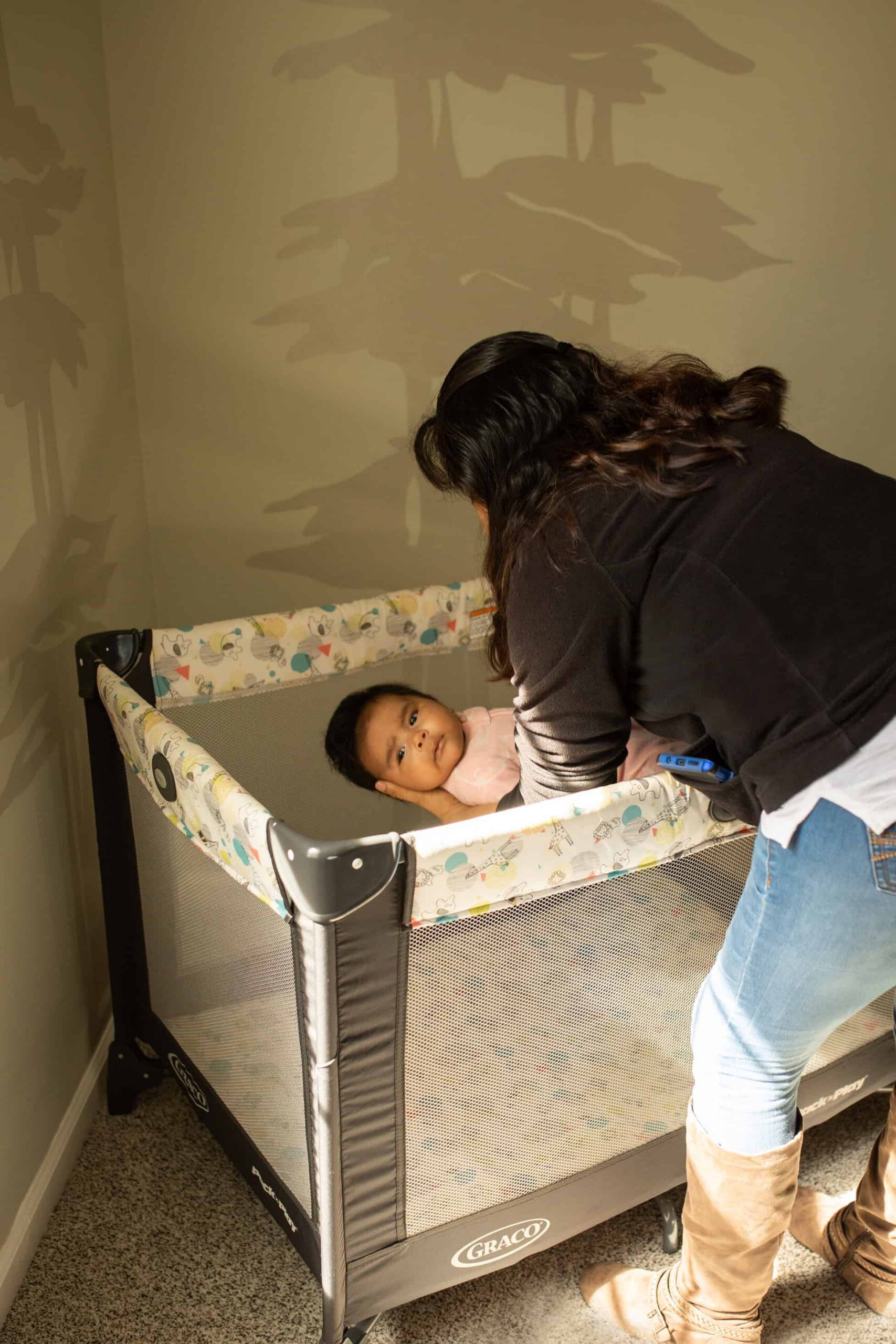
Deciding where your infant should and should not sleep for naps and at night is important. The American Academy of Pediatrics (AAP) recommends that babies sleep safest alone (on a separate surface from their parents, siblings, or pets), on their backs (not their sides or stomach, until they can roll over on their own), and in a crib without pillows, bumper pads, and toys.
There are many options for where to put your baby to sleep for naps and at night; they range from safe to very risky.
Read more about the various options, so you can make an informed decision to help keep your baby safe.
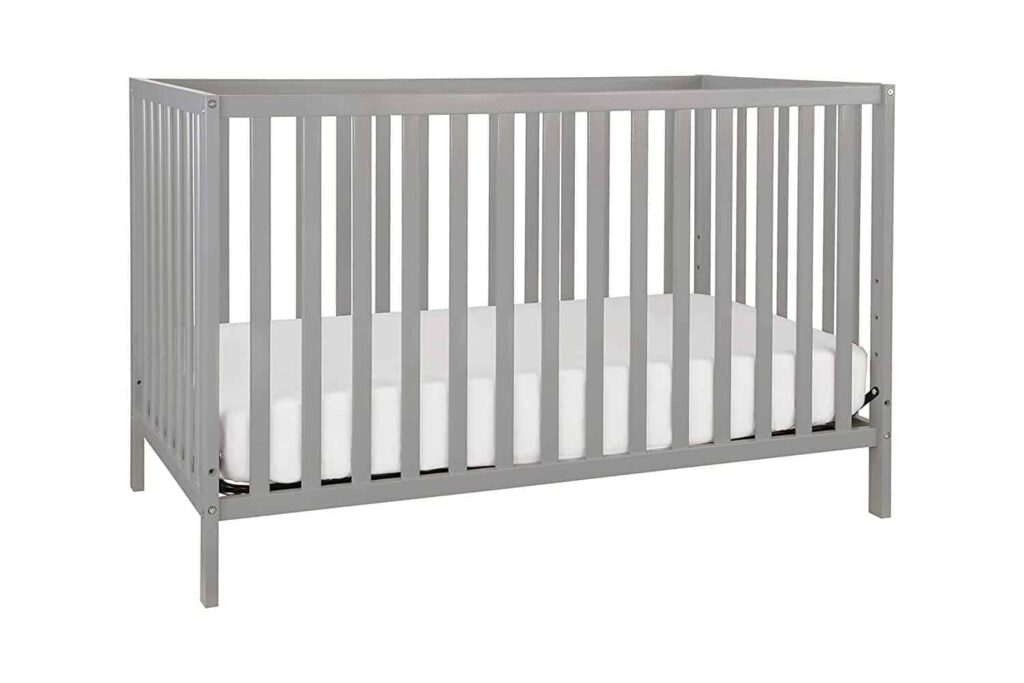
Cribs
A crib is a safe space for your baby to sleep. Read below to be sure that your crib meets safe sleep measures:
Learn More
- To prevent suffocation, never place pillows, thick quilts, stuffed animals in a baby’s sleep environment.
- Make sure there are no gaps larger than two fingers between the sides of the crib and the mattress.
- Do not use bumper pads because these can cause strangulation or suffocation
- Proper assembly of cribs is important. Follow the instructions provided and make sure that every part is installed correctly. If you are not sure, call the manufacturer for assistance. Only original parts should be used,
- Do not use cribs older than 10 years, broken or modified cribs. Infants can strangle to death if their bodies pass through gaps between loose components or broken slats while their heads remain entrapped.
- Never place a crib near a window with blinds, curtain cords or baby monitor cords; babies can strangle on cords.
- No more than 2 3/8 inches between crib slats so a baby’s body cannot fit through the slats. If a soda can fits easily through the slats on a crib, the spaces between the slats are too wide.
- A firm snug-fitting mattress so a baby cannot get trapped between the mattress and the side of the crib.
- Do not put a car seat, carrier, infant recliner or other items with an infant inside the crib. Many of these items can tip over when placed on top of an uneven surface, such as a mattress. Babies have also flipped over the side of these products and become wedged between them and other items in the crib.
- Click HERE to read more about crib safety.
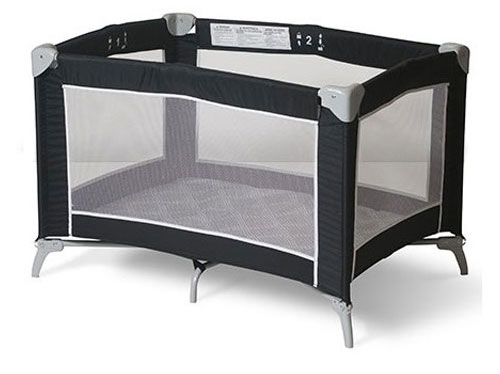
Pack ‘n Plays (Play Yards and Portable Crib)
A pack’n play (also called play yards and portable cribs) is a safe space for your baby to sleep.
Learn More
A pack’n play (also called play yards and portable cribs) is a safe space for your baby to sleep. Read below to be sure that your pack’n play meets safe sleep measures:
- Set up play yards properly according to manufacturers’ directions. Only use the mattress pad provided with the play yard; do not add extra padding.
- To prevent suffocation, never place pillows or thick quilts in a baby’s sleep environment.
- The mattresses in the play yard are thin and that is ok for your baby! Do not add extra padding, foam, or an additional mattress to the play yard. Doing so can cause babies to suffocate by getting their face stuck in the added soft items or because of the extra additions, the flexible sides of the play yard can be pressed out. This creates dangerous and deadly gaps between the side and the added material in which a baby can get trapped.
- Never place a play yard near a window with blind, curtain cords or baby monitor cords; babies can strangle on cords.
Before buying or borrowing a play yard, check this playpen/play yard recall list to make sure that the product you are using has not been recalled.