

The American Academy of Pediatrics (AAP) strongly recommends against bed sharing with an infant. Bed sharing is when someone sleeps on the same surface with a baby, such as a chair, sofa, or bed. Many parents do bed share for different reasons. Some parents do so on purpose and some do so on accident. The majority of infant sleep-related deaths in North Carolina are associated with bed sharing.
There is no 100% safe way to bed share, but there are issues that make bed sharing more dangerous.
It’s extra important not to bed share with baby if:
- If the parent or caretaker has been drinking alcohol, used marijuana or taken any medicines or illicit drugs. The risk of sleep-related infant death is more than 10 times higher for babies who bed share with someone who is fatigued or has taken medications that make it harder for them to wake up; has used substances such as alcohol or drugs.
- If baby is very young, small or was born prematurely. The risk of sleep-related infant death while bed sharing is 5 to 10 times higher when your baby is younger than 4 months olds. And the risk of sleep-related infant death is 2 to 5 times higher when your baby was born preterm or with low birth weight.
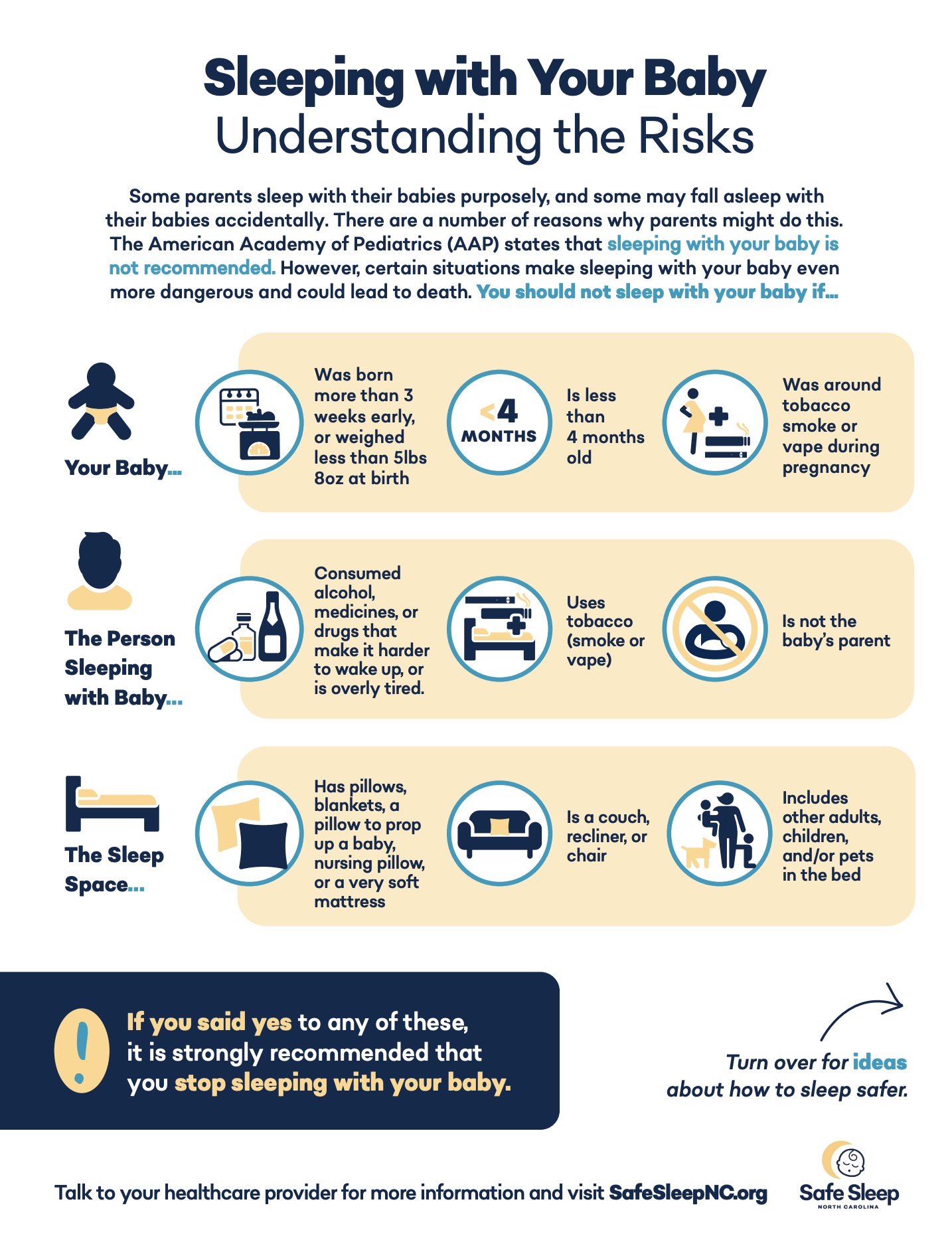
See below for factors that increase the risk of infant death when bed sharing.
This flyer also has this information.
If Your Baby:
- Was born premature (less than 37 weeks)
- Was born weighing less than 5 lbs 8 oz
- Is less than 4 months old
- The mother of the baby smoked during pregnancy
If the Person(s) Sharing the Sleep Space with Baby:
- Smokes or vapes (even if not in bed)
- Has taken medicines or drugs that might make it harder to wake up
- Has consumed alcohol
- Is not the baby’s parent
If the Sleep Space:
- Has pillows, blankets, loose bedding, or a soft mattress (such as memory foam or pillow-top)
- Is a couch or recliner
- Has multiple people in the bed, including other children or pets
If you answered yes to any of these factors, it is strongly suggested that you reconsider bed sharing to keep your baby safe.
Instead, consider using a safety-approved crib, bassinet, or pack-n-play in your room beside your bed, or a safety-approved bedside sleeper attached to your bed.
Regardless of WHERE Baby Sleeps, ALL Babies Should Sleep:
- On their back
- On a firm, flat surface
- In a smoke/vape-free space
- With NO blankets, pillows (including nursing pillows), or other extra items near them
Tips to Make Infant Sleep Safer:
- Share your room with baby, not your bed. Keep baby in your room close to your bed, but on a separate sleep surface designed for infants. This makes it easier to feed, comfort, and watch your baby at night.
- Keep baby safer during night-time care and feeding. If you bring baby into your bed for feeding, remove all soft items and bedding from the area. Put baby back in their own sleep space when finished. Bringing your baby into bed for nighttime feeding is safer than feeding on a recliner, chair, or couch because those surfaces increase the risk of suffocation.
- If you fall asleep while feeding or caring for your baby in your bed, place the baby back in the separate sleep area as soon as you wake up. Consider setting a timer on your phone in case you fall asleep.
- Couches and armchairs can be very dangerous for babies. Be mindful of how tired you are and avoid these surfaces for feeding or caring for baby if you think you might fall asleep.
- Ask someone to stay with you while you’re feeding or caring for baby to help keep you awake or to place the baby in a safe sleep area if you fall asleep. You can also take turns so one caregiver rests while the other cares for the baby.
It is normal for babies to wake frequently at night. This can be challenging for parents and caregivers. Try to have a plan for how to make those long nights safer when caring for your baby.